Solitaire for Seniors Game
Guru Puzzle GameCard
4.92.28K Reviews
- Version
- 5.6.0-26081263
- Installs
- 1.00M
- Age Rating
- Everyone
Screenshots
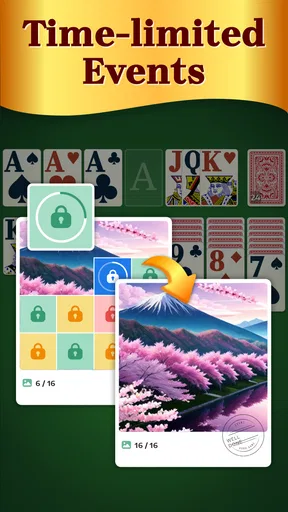
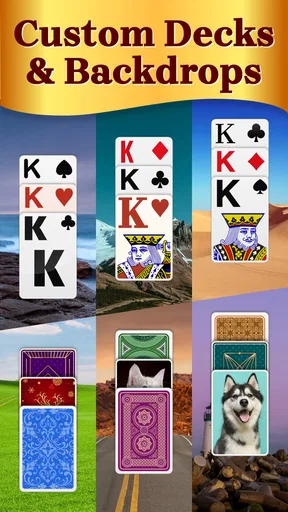
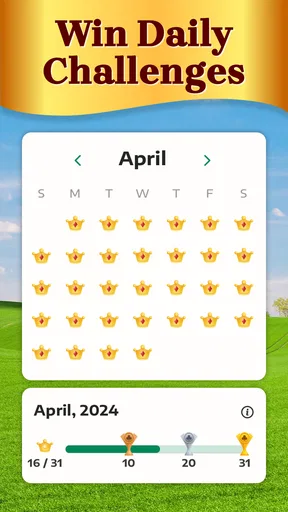
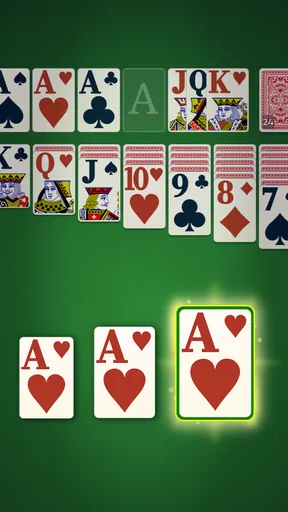
Our Review of Solitaire for Seniors Game
 Analysis by Appyee
I found Solitaire for Seniors easy to understand within minutes, but its real test is not whether it can fill an afternoon. The more useful question is whether it still feels worth opening after the first week, when the simple pleasure of turning cards has become familiar. My experience is that Guru Puzzle Game has made a calm, accessible card game with a clear audience, yet its lasting value depends heavily on what you want from solitaire: quiet repetition and comfortable play, rather than constant novelty or deep competition.
This is a free card game for Android, rated for Everyone, and it runs on devices using Android 6.0 or later. It has reached over a million installs and holds a 4.9 average from around 88 thousand ratings, which suggests that its straightforward approach is connecting with a large audience. I would not treat those figures as a guarantee that every player will enjoy it, but they do point to a game that has found a dependable place among casual solitaire apps.
What the first week feels like
The first appeal is the low mental barrier. You do not need to learn a fictional world, manage a complicated collection, or understand a long tutorial before playing. The familiar solitaire format lets me begin almost immediately, and that matters for anyone looking for a short break rather than a new hobby that demands preparation.
I can imagine a typical use very clearly: after lunch, I have a few quiet minutes and want something more engaging than scrolling, but not something that will pull me into a demanding challenge. A single deal gives that pause a shape. I make a few moves, reconsider a blocked column, and either finish or start again. The activity is gentle enough for a relaxed setting, while still giving my attention something specific to follow.
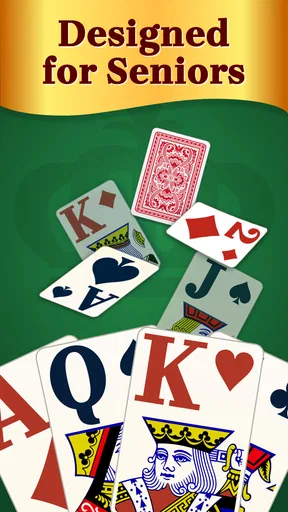
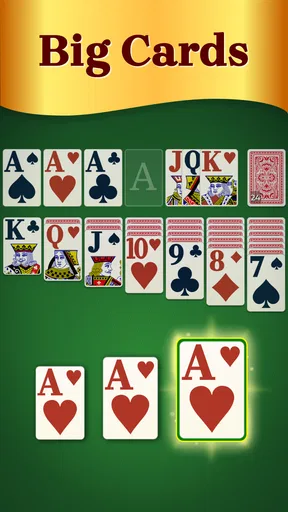
The senior-focused presentation is important here. Card games can become frustrating when symbols are cramped, contrast is weak, or the screen feels busy. This edition is aimed at making solitaire approachable for older players, so I found the overall experience more suitable for people who prefer clarity over decoration. That does not mean every phone display will feel equally comfortable. Screen size, brightness, and eyesight still affect the experience, and a small handset may be less pleasant than a larger one.
During the first week, the strongest quality is consistency. The game does not ask me to become invested in a story or keep track of a complicated system. I can leave after one hand without feeling that I have abandoned a larger task. That makes it useful for waiting rooms, quiet evenings, travel, or a short mental reset between chores.
There is also a practical advantage for people who are not confident with mobile games. Solitaire is recognizable, so the learning curve comes from the touch controls rather than from unfamiliar rules. I would recommend starting slowly instead of tapping rapidly through the opening moves. Looking at the whole layout before acting helps preserve options, especially when a move appears useful but exposes no new card.
One of my first-week tips is to treat each hand as a small planning exercise rather than a race. I look for moves that reveal hidden cards and avoid emptying a column unless I already have a sensible king placement available. That habit makes the game feel more thoughtful without turning it into a stressful puzzle. It is a small distinction, but it helps separate satisfying play from automatic tapping.
The weak point of the opening period is also obvious: solitaire remains solitaire. If you already find traditional card layouts repetitive, a senior-friendly presentation will not completely solve that problem. The game makes the familiar format comfortable; it does not transform it into a radically different genre. Players seeking action, social competition, or a strong sense of progression may run out of excitement quickly.
Who benefits most from the design
I see the clearest fit for older adults who want a readable, familiar pastime, for relatives choosing a simple game for someone who is less comfortable with smartphones, and for anyone who enjoys quiet card play without a large amount of visual noise. It can also suit people who want to exercise patience and planning in small sessions, although I would not present it as a formal brain-training tool.
It is less convincing for someone who wants a large variety of card games in one download. A dedicated solitaire player who enjoys experimenting with many rule sets may prefer a broader collection. Likewise, a player motivated by leaderboards, multiplayer interaction, or elaborate rewards should look elsewhere. The appeal here is narrow by design, and that narrowness is both its strength and its limitation.
Whether it keeps its value from month to month
After the novelty fades, the game survives on routine. I can see it becoming a dependable part of a daily break because a solitaire hand does not require a large block of time. The recurring value comes from the combination of recognition and uncertainty: the rules stay familiar, while the arrangement of cards gives each deal a different sequence of decisions.
That kind of value is modest but real. I do not open it expecting a new discovery every session. I open it because I know what sort of attention it asks from me. On a tiring day, that predictability is useful. It gives me a controlled activity that is more active than watching a video but less demanding than a strategy game.
For older players, repetition can be a positive rather than a flaw. Familiar controls reduce the need to relearn the interface, and a stable routine can make the game less intimidating. I would suggest setting a natural stopping point, such as one or two hands, because the game’s simplicity can otherwise turn a short break into a longer session without offering much additional variety.
A second useful habit is to change the purpose of a session. Sometimes I play for relaxation and make safe moves slowly. At other times I try to improve my decision-making by checking whether I am revealing cards in the best order. This does not add new modes to the game, but it gives the same layout a different mental texture. The trade-off is that this extra depth comes from the player, not from a large progression system.
The high average rating and broad install base suggest that many people appreciate exactly this dependable structure. Still, popularity should not be confused with long-term freshness. A game can be well liked and still become background entertainment for a player who needs constant goals. My own judgment is that it has lasting space for routine-oriented users, while novelty-driven users may move on once the initial comfort wears off.
There is also a useful distinction between playing alone and sharing the game with a family member. If I were helping an older relative become comfortable with mobile games, I would use the first session to adjust the device’s general display settings, explain touch gestures, and play alongside them. The app’s simplicity makes that introduction easier, but the phone itself can still create confusion. A clear game cannot remove every obstacle created by notifications, accidental taps, or unfamiliar navigation.
Someone deciding whether to install it should therefore ask a practical question: do I want a calm solitaire companion, or do I want a card-game collection with more variety? If the first answer is yes, the free download makes trying it low-risk. If the second answer is yes, this focused design may feel restrictive even when the individual hands are enjoyable.
The cost of keeping it comfortable
The game is free to start, which makes it accessible for casual players and for families testing whether an older user likes this style of play. In-app purchases are listed at $6.99 per item. That is worth remembering before treating the free entry point as the complete financial picture. I would avoid making a purchase until I had used the game long enough to decide whether it had become part of my routine.
For me, the best way to evaluate that decision is to watch for repeated use rather than a strong first impression. If I open the game several times over a few weeks and still appreciate its calm layout, a purchase may feel more reasonable depending on what is offered at the moment of buying. If I only return when I am bored and quickly leave, paying would not address the underlying lack of variety.
The maintenance burden is otherwise fairly light from a player’s point of view. The current version is 5.6.0-26081263, and keeping an app updated is sensible for compatibility and general reliability. I would still check the game after an update rather than assuming that every control feels exactly as before, especially when recommending it to someone who depends on a familiar interface.
Device maintenance matters more than many reviews admit. An older Android phone may technically meet the minimum requirement of Android 6.0 while still offering a smaller display or slower response than a newer device. For a senior player, that difference can affect comfort more than the game’s rules do. I would test card readability in the actual lighting where the person plans to play, not only indoors under ideal conditions.
Another practical tip is to keep the phone’s touch surface clean and use a stable grip. Solitaire involves repeated taps and drags, so a player with less precise movement may benefit from placing the device on a table rather than holding it in one hand. This is not a special feature of the game, but it is a realistic part of making this particular style of play work well for its intended audience.
Where fatigue begins
The main source of fatigue is repetition without a strong sense of advancement. A relaxing loop can become mechanical when every session has the same emotional shape. I noticed that the game is most enjoyable when I am in the mood for quiet concentration; it is less effective when I want the app itself to surprise me or give me a reason to chase a larger objective.
There is also a fine line between accessibility and over-simplicity. A clear, senior-friendly design removes distractions, but players who enjoy visual customization or a more energetic presentation may find it plain. That is not a design error. It is a deliberate trade-off, and the right choice depends on whether comfort or stimulation matters more to you.
Another limitation is that solitaire can encourage unproductive replaying. When a hand goes badly, I may restart immediately instead of thinking about the decision that caused the problem. I get more value when I pause and identify whether I blocked a column, used a reserve card too early, or missed a safe reveal. That small discipline turns repetition into practice; without it, the sessions can blur together.
I would also skip this game if I needed a social reason to return. It is not the kind of experience I would choose for playing with friends in real time or comparing progress with a group. A multiplayer card app, a larger solitaire collection, or a more competitive title would better suit that need. This one works best when solitude is part of the appeal.
Players should think about attention and eyesight as well. Even a readable card layout can become tiring during long sessions, particularly on a small screen or in dim light. Shorter sessions are the sensible approach. I found that the game’s strongest mood disappears when I force myself to continue after the relaxing part has ended.
My long-term verdict
After looking beyond the first-week charm, I think this game earns lasting space for a specific kind of player. It is a calm, focused solitaire option from Guru Puzzle Game that prioritizes familiarity and accessibility over breadth. The Everyone rating, free entry, and support for Android 6.0 or later make it easy to consider, while the established user response shows that it is not an obscure experiment.
My recommendation is strongest for older adults, beginners, and experienced solitaire players who want a comfortable daily card ritual. I would also recommend it to someone buying or configuring a phone for a relative, provided the screen is large and readable enough for that person. The most successful setup is not simply installing the game; it is pairing it with sensible session limits, good lighting, and a short explanation of the touch controls.
I would not recommend it as the main game for players who need constant novelty, deep progression, multiplayer competition, or a wide range of card variants. Those users may enjoy the first few sessions but eventually feel that the app has too little to maintain their interest. A broader alternative would be better when variety is the priority.
Its lasting strength is dependable relaxation, not endless discovery. That makes the game easy to underestimate. It does not need to dominate my phone to be useful; it only needs to remain a pleasant option when I want a quiet few minutes. In my experience, it succeeds at that job, as long as I accept the narrow purpose and do not expect a full gaming collection.
Overall, I would keep it installed for a senior player or anyone who returns regularly to classic solitaire. The free version is a sensible way to judge the fit, and the paid items deserve consideration only after the routine has proved itself. Once the novelty fades, the game remains worthwhile because its simplicity is intentional and its maintenance demands are modest. It is not for everyone, but for the right player, that dependable simplicity is exactly why it can stay on the phone.
Privacy and Permissions
See what permissions an app requests and how it handles your data.
- Phone
- read phone status and identity
- Photos/Media/Files
- read the contents of your USB storage, modify or delete the contents of your USB storage
- Storage
- read the contents of your USB storage, modify or delete the contents of your USB storage
- Wi-Fi connection information
- view Wi-Fi connections
- Device ID & call information
- read phone status and identity
- Other
- view network connections, full network access, control vibration, prevent device from sleeping, read Google service configuration
Verdict
Strengths of Solitaire for Seniors Game
- Large cards and clear visuals make suits easy to distinguish.
- Simple controls are comfortable for users with limited dexterity.
- Relaxed gameplay works well for short, low-pressure sessions.
- Helpful hints can guide players when they are unsure of their next move.
- Offline play is convenient when traveling or using limited data.
Limitations of Solitaire for Seniors Game
- Some features may be restricted until an upgrade or purchase is made.
- Repeated layouts can make long sessions feel less varied.
- Hints may reduce the challenge for experienced Solitaire players.
- Ads can interrupt play, especially between completed games.
- Older devices may experience slower loading or occasional stuttering.
Other Releases by Guru Puzzle Game
View All
Ball Sort Puzzle - Color Game
Puzzle4.9

Water Sort Puzzle - Sort Color
Puzzle4.8


Differences - Find & Spot It
Puzzle4.9
Similar Picks in This Category
View All
Solitaire - Classic Card Games
MobilityWare4.6

UNO!™
Mattel163 Limited4.3

Spider Solitaire: Card Games
MobilityWare4.6

Solitaire.com - Classic Cards
Tripledot Studios Limited4.7

Plants vs. Zombies™ Heroes
ELECTRONIC ARTS4.1

Hearthstone
Blizzard Entertainment, Inc.4.1
Frequently Asked Questions
What is Solitaire for Seniors Game, and how is it designed for older players?
Solitaire for Seniors Game is a digital card game based mainly on classic Klondike Solitaire, with an interface intended to be comfortable for older adults. It typically emphasizes larger cards, clear symbols, simple controls, and uncluttered menus. The game is suitable for players who want a relaxing solo activity, although the exact accessibility options may vary depending on the device and app version.
Is Solitaire for Seniors Game free to download and play?
The game may be available as a free download, but users should check the store listing carefully because free versions can include advertisements, optional purchases, or premium features. Some functions, such as removing ads, unlocking additional card designs, or accessing extra game modes, may require payment. Reviewing the in-app purchase information before downloading can help avoid unexpected costs.
Does Solitaire for Seniors Game require an internet connection?
Many solitaire apps allow the main card game to be played without an internet connection once installed. This can make Solitaire for Seniors Game convenient for travel or locations with limited connectivity. However, advertisements, updates, cloud features, leaderboards, and certain bonus content may require internet access. Availability of offline play can differ between Android and iOS versions.
Is Solitaire for Seniors Game easy to use for people with limited vision or dexterity?
The game is generally intended to be easier to read and operate than standard card-game apps because it may use larger cards, prominent buttons, and straightforward tap controls. Even so, the experience depends on the phone or tablet screen size and the app’s available settings. Users should look for options such as enlarged cards, sound effects, vibration, contrast controls, or device-level accessibility support.
What should users know about advertisements, privacy, and permissions?
Before installing Solitaire for Seniors Game, users should review the app’s store page for its advertising policy, privacy information, and requested permissions. A simple solitaire game normally should not need access to sensitive features such as contacts, messages, or precise location. Free editions may display banner or video advertisements, while a paid upgrade might reduce them. Always download from the official Google Play Store or Apple App Store.
Play our best games!


